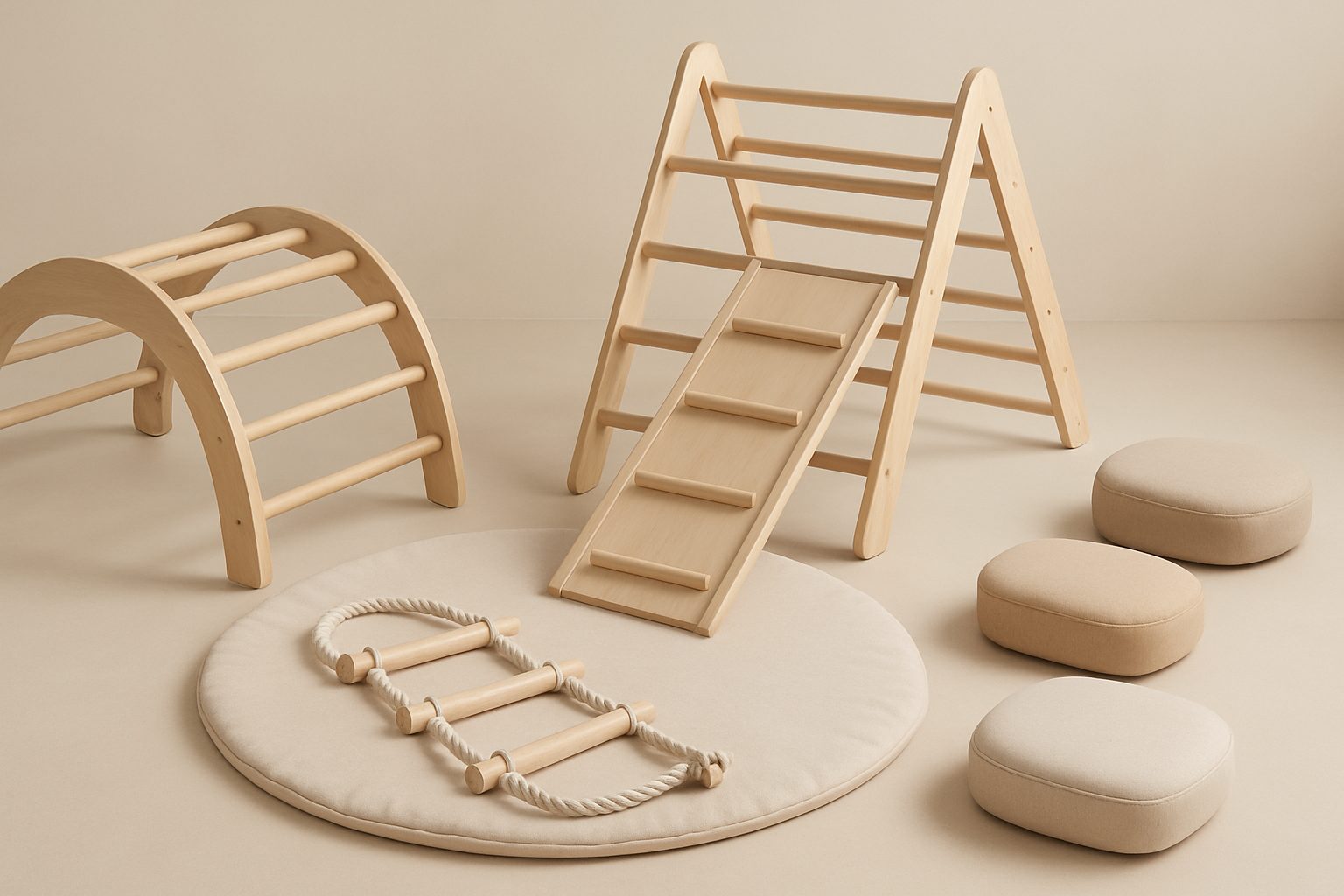
Best Freestanding Indoor Climbing Walls for Kids UK 2025
If your children have watched climbing competitions or tried an indoor climbing centre and caught the bug, bringing that experience home can feel daunting. The good news: freestanding climbing walls have become genuinely practical for family gardens and playrooms. Unlike built-in installations, they don't require permanent fixings, making them accessible for most homes. This guide covers what actually matters when choosing one—and which models work well from age 4 onwards.
What to Look For: The Essentials
Freestanding climbing walls aren't all equal. Before comparing specific products, understand the variables that affect usability and longevity.
Grip-hold density determines how many different routes you can climb. Dense walls—with holds every 15–20cm—offer more variety and suit kids who want progression and different challenges. Sparser walls, with holds 30–40cm apart, are typically fine for younger children (4–6 years) but feel limiting quickly. More holds also mean smaller holds within reach for little hands, which matters.
Maximum user weight matters more than you'd think. Most children's models cap at 60–80kg, but an active 10-year-old on a decent diet might weigh 45kg already. Growing room is valuable—a wall rated to 100kg gives you breathing space for a tall, sturdy child.
Footprint and height affect how the wall sits in your space. A-frame bouldering walls (roughly 1.2–1.5m tall, diamond-shaped) need roughly 2m × 1.5m of clear space. Larger freestanding panels (1.8–2.4m tall) need a bigger footprint but allow taller climbing routes. Measure twice before ordering.
Flooring requirements aren't optional. Most manufacturers recommend crash mats beneath and around the wall—typically 30cm out from the base, especially on one side where falls are most likely. Without proper matting, landing on hard flooring risks injury. Budget roughly £150–300 for decent mats if the package doesn't include them.
A-Frame vs. Panel Walls: Which Works for Your Home?
A-frame bouldering walls are the most popular choice for families. They're shorter (usually 1.2–1.5m), freestanding without additional support, and easier to move if needed. The angled climbing surface feels natural for developing technique, and kids can't fall far. They're ideal for gardens with limited ceiling height or playrooms where a full-height wall isn't practical. The main drawback: you get fewer route options on the climbing surface because the angle is fixed.
Freestanding panel walls are taller (1.8–2.4m) and look more like what kids see at climbing gyms. They offer more varied routes and a steeper challenge for progressing climbers. However, they demand more space, stable flooring, and usually require tying off to a wall or ground anchor for safety—which defeats the "freestanding" appeal somewhat. They're better for larger gardens or dedicated playrooms where you're not moving them.
Grip Types and Climbing Progression
Most entry-level walls use plastic jugs (bucket-shaped holds) and small crimps. Jugs are forgiving for small hands and suit ages 4–8. As children progress around age 8–10, having texture variation—some slopers (rounded holds), some edges, some more technical crimps—keeps them engaged.
Check whether the wall comes with holds pre-installed or if you choose them. Pre-installed saves thinking, but swappable holds on slotted panels give you flexibility to adjust difficulty as your child improves. Some walls allow you to add extra holds over time, which extends the lifespan of the investment.
Top Freestanding Models Worth Considering
Walltopia home systems (around £600–1200) are well-engineered A-frames with good grip density and durable materials. They're pricey but built to last through multiple children. Grips feel quality, and the company offers replacement holds, so customisation is straightforward.
Atomik climbing panels (£400–800) are a solid mid-range option. Their freestanding panel systems come with decent hold variety, and the footprint is manageable. They're available with different heights and hold densities, so you can match your space and child's level.
Grundig and Monkee Bars smaller A-frames (£200–400) are reliable for younger kids (4–7). They're compact, the holds are appropriately sized, and they're light enough to move around. Don't expect route complexity, but they're honest value for introducing climbing at home.
Budget own-brand models from garden centres (often under £150) can work if you're testing whether your child will actually use it. They tend to have lower grip density and wear faster, but they're low-risk for a first purchase.
Space, Safety, and Realistic Expectations
A garden wall collects leaves, damp, and UV exposure. Wood-based walls need treating or covering in winter; recycled-plastic holds are more durable. Check the manufacturer's maintenance advice before buying.
Install crash mats properly—gaps matter. A fall from 1.5m with poor matting is how injuries happen. Look for mats at least 10cm thick, and arrange them so your child can't land on corners or edges.
Children's climbing interest waxes and wanes. A wall gathering dust in the garden is money wasted. Be honest: does your child climb at gyms regularly, or did they like it once? Rental options exist if you want to test first.
The Bottom Line
Freestanding climbing walls work best for families where the child already enjoys climbing and has space to use one safely. A-frame walls suit most homes; panel walls suit larger gardens or dedicated spaces. Expect to spend £300–600 on a decent, durable wall plus flooring, and factor in maintenance. The best model is the one you'll actually install properly, use regularly, and maintain—not the cheapest or most feature-heavy.
More options
- Indoor Climbing Frames – General UK (Amazon UK) (Amazon UK)
- Toddler & Baby Climbing Frames UK (Amazon UK) (Amazon UK)
- Wooden Indoor Climbing Frame & Play Gym (Amazon UK) (Amazon UK)
- Freestanding Kids Climbing Wall & Boulder Panel (Amazon UK) (Amazon UK)
- TP Toys & Plum Play Indoor Frames (Amazon UK) (Amazon UK)