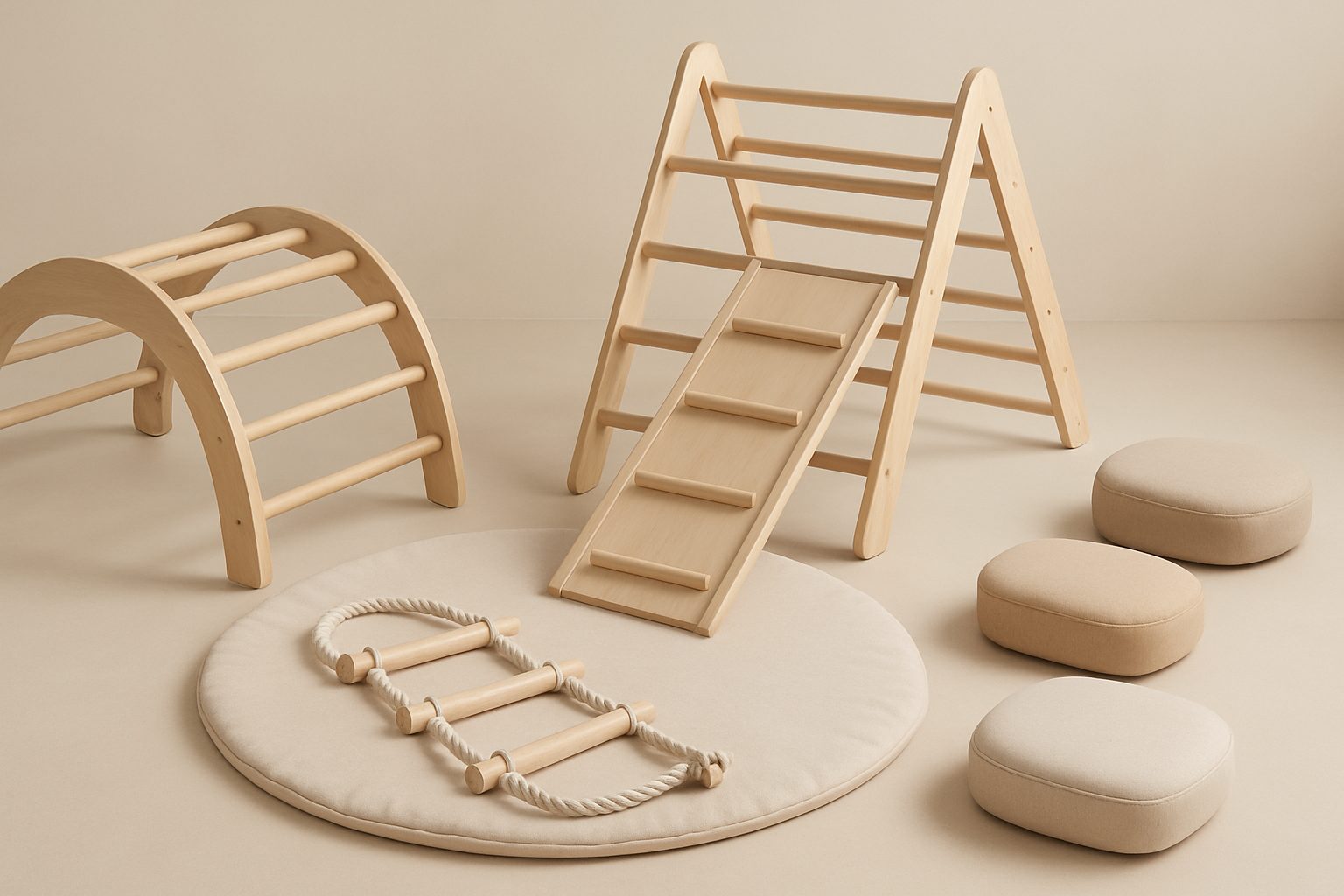
Best Indoor Climbing Frames for 6–10 Year Olds UK: Bigger Challenges, Bigger Fun
By age six, most children have outgrown toddler-sized climbing toys. This is the sweet spot where they're ready for real climbing challenges—rope walls, monkey bars, and multi-directional structures that keep them engaged indoors through autumn and winter. An indoor climbing frame designed for this age group can burn serious energy, build genuine strength, and offer the kind of physical challenge that keeps kids coming back.
The tricky part is finding one that actually fits your space and budget, grows with your child, and doesn't fall apart after six months.
What Six to Ten Year Olds Actually Need from a Climbing Frame
Kids in this age group are stronger and more confident than younger children, but they're still developing coordination. They'll push a frame harder—swinging from bars, hanging upside down, testing every joint—so build quality matters far more than novelty.
The best frames for this age offer multiple climbing options: a rope wall for upper-body work, cargo netting, climbing bars or ladders, and ideally a horizontal bar or rope for swinging. Variety keeps the frame interesting and works different muscle groups. A frame that's only a ladder gets boring within weeks.
Weight capacity becomes real at this age. A six-year-old might weigh 20kg; by ten, they could be 35kg. Look for frames rated to at least 50kg, ideally higher if you want longevity. Some premium frames are rated to 100kg+, which means they'll still be useful if your child invites friends over.
Space and installation are practical factors. Climbing frames come as freestanding units (easier to move, no wall damage, more expensive) or frames designed to bolt to a wall (more stable, saves floor space, requires drilling). Most homes have room for a freestanding frame if you're willing to use a corner or tuck it under a sloped ceiling.
Types of Climbing Frames for This Age
Basic rope and ladder frames are the entry point. A sturdy wooden or steel A-frame with climbing rope and a basic ladder costs £200–500. These are reliable but offer limited variety.
Multi-activity frames combine climbing, swinging, and gymnastics in one unit. These typically include a rope wall, monkey bars, pull-up bar, and sometimes a gym mat or hanging ring attachments. They're bulkier and cost £400–1000, but a single frame occupies the space of a small sofa and provides months of engagement.
Premium adjustable systems use modular components—clips, bars, and ropes that you can reconfigure. These start around £600–800 and let you change the layout as your child develops new skills. They're excellent long-term value if you have the space.
Wall-mounted options fix to a sturdy wall and include cargo netting, climbing holds, and bars. These save floor space dramatically (useful in smaller homes) but require confident DIY installation or a handyperson. Costs range from £300–700 depending on size.
Key Features to Prioritize
Material quality matters most. Solid wood frames (often pine or beech) are sturdy but require occasional sanding if they splinter. Steel frames are maintenance-free but can be colder underfoot. Rope should be weight-rated and thick enough that a child can't accidentally pinch their fingers.
Stability is non-negotiable. A frame that wobbles or shifts slightly loses kids' trust immediately. Check that feet are wide enough for the height, and if you're mounting to a wall, use proper fixings (not standard picture hangers).
Rope accessibility matters more than you might think. If the ropes are too far apart or the starting point too high, your six-year-old can't use them. Frames that grow with your child should have options for younger users too—or you'll end up with an expensive lump of wood your eight-year-old has outgrown.
Ongoing durability is worth paying for. Budget frames sometimes have splinter issues or ropes that fray. Mid-range frames from established brands tend to hold up to genuine, daily use. Premium frames are built to survive multiple children and years of roughhousing.
Installation and Safety Considerations
Most climbing frames need assembly—budget two to three hours if you're handy, or hire someone if DIY isn't your strength. Wall-mounted frames need proper fixings into studs; if your walls are plasterboard, it's a non-starter.
Safety matting isn't essential if the frame has a low height, but it gives genuine peace of mind. Thick foam mats (5–10cm) cost £100–200 and cushion falls from climbing height. Place the mat under the frame and extend it under any swing areas.
Check that ropes can't be caught around a child's neck. Ropes should either be short (no dangling ends) or designed so they can't form a loop. Established manufacturers get this right; cheap options sometimes don't.
Finding the Right Frame for Your Budget and Space
At £200–400, you'll find basic A-frames with rope and ladder. These are solid entry points, though limited in variety. They suit small spaces or trial runs before you commit to something bigger.
At £400–700, multi-activity frames appear. These offer genuine value—rope walls, bars, swinging options, and better build quality. Most families find this price range hits the sweetspot between cost and capability.
At £700+, you're looking at premium systems or large modular setups. These are overkill for most homes but brilliant if space isn't a constraint and you want the frame to stay interesting for several years.
Consider your space first. If you have a corner you're not using, a freestanding multi-activity frame works. If space is tight, wall-mounted saves room. Then match the frame to what your child loves—if they're obsessed with ropes, prioritise a frame with a dedicated rope wall over one with gymnastics bars they'll ignore.
Realistic Expectations
An indoor climbing frame won't replace outdoor play, and it won't fix a screen-time problem. What it does do is provide a rainy-day outlet for physical energy and build real upper-body strength and coordination. Kids use them hardest in winter when outside feels miserable. By spring, the novelty typically fades, though a well-designed frame with varied challenges stays in regular use longer than basic alternatives.
Buy one you can afford to keep for two or three years. The best frame is the one your child actually uses, not the fanciest option that ends up unused in a corner.
More options
- Indoor Climbing Frames – General UK (Amazon UK) (Amazon UK)
- Toddler & Baby Climbing Frames UK (Amazon UK) (Amazon UK)
- Wooden Indoor Climbing Frame & Play Gym (Amazon UK) (Amazon UK)
- Freestanding Kids Climbing Wall & Boulder Panel (Amazon UK) (Amazon UK)
- TP Toys & Plum Play Indoor Frames (Amazon UK) (Amazon UK)