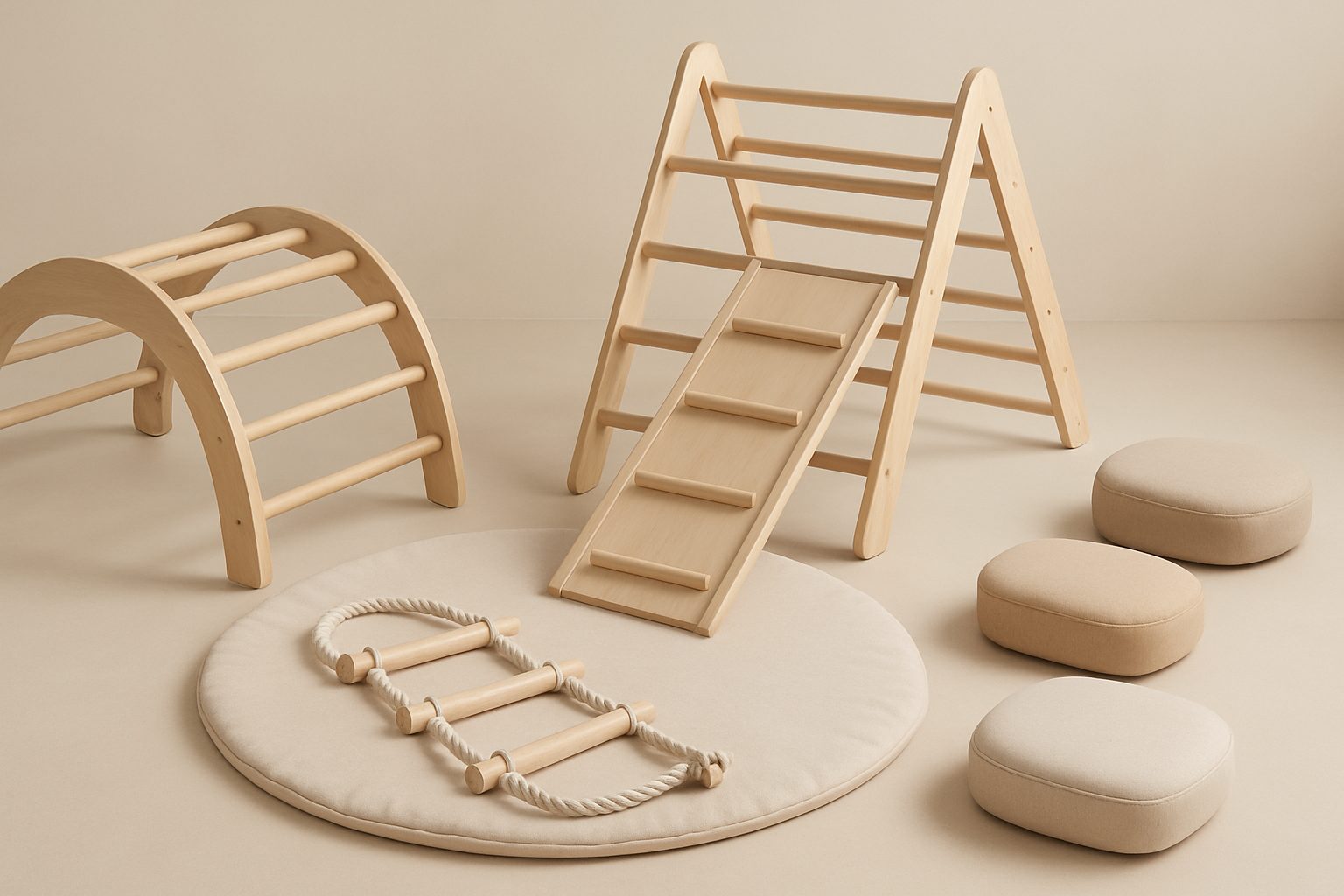
Best Indoor Climbing Frames for Toddlers UK 2025 (Ages 1–3)
Indoor climbing frames designed for toddlers have become increasingly popular with UK parents seeking safe, developmental play equipment. Unlike standard playgrounds, these frames sit at heights suitable for young children and prioritise stability and smooth edges. Choosing the right frame for your one to three-year-old requires understanding what makes them genuinely safe and developmentally appropriate.
Why climbing frames matter for young toddlers
Climbing—or attempting to climb—develops your toddler's gross motor skills, balance, and spatial awareness. It builds confidence as they navigate small heights and obstacles. Equipment designed specifically for this age group keeps these benefits within a genuinely safe envelope, with low fall heights and appropriate support.
UK safety standards for children's furniture are stricter than many people realise. Look for frames that meet BS EN 1176 (playground equipment standards) or equivalent safety certifications. These standards govern everything from edge radius (smooth, not sharp) to stability under load.
Low-height frames: the safer option
The safest climbing frames for toddlers stay under 1 metre tall. A fall from this height to a carpeted floor or foam mat presents manageable risk. Higher frames increase injury potential significantly without adding developmental benefit for this age group.
Rounded edges throughout are non-negotiable. Toddlers lose balance frequently; sharp edges turn minor falls into wounds. Check that all joins, corners, and connection points are rounded to at least a 10mm radius. Many budget frames skip this detail entirely.
Weight capacity matters too. Toddlers rarely climb alone—you'll often be spotting, helping, or following alongside. Frames rated for 50kg or more give you confidence during this involvement.
Pikler triangles explained
Pikler triangles originated in Hungary and have gained significant UK traction. They're simple: two wooden legs joined at an angle, forming a triangle you can climb. The rungs are spaced for toddler stride length, typically 20–25cm apart.
The beauty of Pikler triangles lies in their simplicity and versatility. Your toddler learns to climb at their own pace, pull themselves up, and judge their own abilities. They're also compact—many fit in a living room corner—and stable, with a low centre of gravity.
Wooden Pikler triangles typically cost £60–£180 in the UK, depending on materials and whether they include add-ons like ramps or slides. Beech wood is standard and durable. Check that wood is treated safely (food-safe finishes) and that joints are properly reinforced. A wobbly triangle is neither fun nor safe.
Some triangles reverse to create a ramp for sliding, which extends play value. Others attach to play yards or gym mats for additional configuration options.
Junior play gyms and foam-based frames
Soft-play climbing frames use foam and padded structures alongside low climbing elements. These suit cautious toddlers or those just starting to climb. The padded surfaces reduce impact from falls, though they don't eliminate need for supervision.
Foam frames often combine multiple play modes: climbing, sliding, tunnelling, and hiding. This variety keeps toddlers engaged longer than single-function equipment. They're bulkier than wooden triangles and require more floor space—typically 2 metres square minimum.
Prices range from £150 to £400+ depending on complexity and materials. Check that foam covers are removable and washable; toddlers and spills go hand in hand.
What to look for: practical checklist
Construction: Wood should be solid, not laminated or veneered. Metal frames (aluminium or steel) must have no rust and smooth, non-slip surfaces.
Stability: The frame shouldn't shift or wobble when you apply pressure. Test this before purchase if possible.
Assembly: Some frames arrive flat-packed requiring significant assembly. Budget time and, realistically, a second person. Poor assembly voids most warranties.
Matting: A fall from even 60cm onto hard flooring can cause serious injury. Invest in a proper gym mat (5cm thickness minimum) underneath and immediately surrounding the frame.
Growth: Consider how long your toddler will use the frame. Many wooden designs transition well into preschool years as your child develops confidence and strength.
Safety boundaries matter most
Equipment alone doesn't keep toddlers safe. Consistent supervision is essential. A climbing frame should never replace active watching; it supplements it. Establish clear boundaries about when and how the frame is used. Toddlers shouldn't climb unsupervised, even for moments.
Keep the area around frames clear of hazards. Toys, books, and pet food all become trip hazards when your toddler is learning balance.
Check frames regularly for damage, loose parts, or wear. Wood can splinter; padding can compress unevenly. A frame that's safe month one might develop issues by month six.
The reality of toddler climbing
Many toddlers under 18 months show little interest in actual climbing. They're more likely to pull themselves up using the frame as an aid to standing, or to practise stepping up low obstacles. This is completely normal. Pushing a child toward climbing before they're ready creates frustration, not development.
Others take to climbing enthusiastically and quickly. Your individual toddler's temperament and developmental stage matter far more than the specific equipment you choose.
Conclusion
The best indoor climbing frame for your toddler is one that meets British safety standards, stays under 1 metre tall, has rounded edges, and suits your living space and budget. Whether you choose a classic Pikler triangle, a foam-based junior gym, or a combination approach, the most important investment is a proper mat and consistent, engaged supervision. Equipment supports development; your presence makes it genuinely safe.
More options
- Indoor Climbing Frames – General UK (Amazon UK) (Amazon UK)
- Toddler & Baby Climbing Frames UK (Amazon UK) (Amazon UK)
- Wooden Indoor Climbing Frame & Play Gym (Amazon UK) (Amazon UK)
- Freestanding Kids Climbing Wall & Boulder Panel (Amazon UK) (Amazon UK)
- TP Toys & Plum Play Indoor Frames (Amazon UK) (Amazon UK)