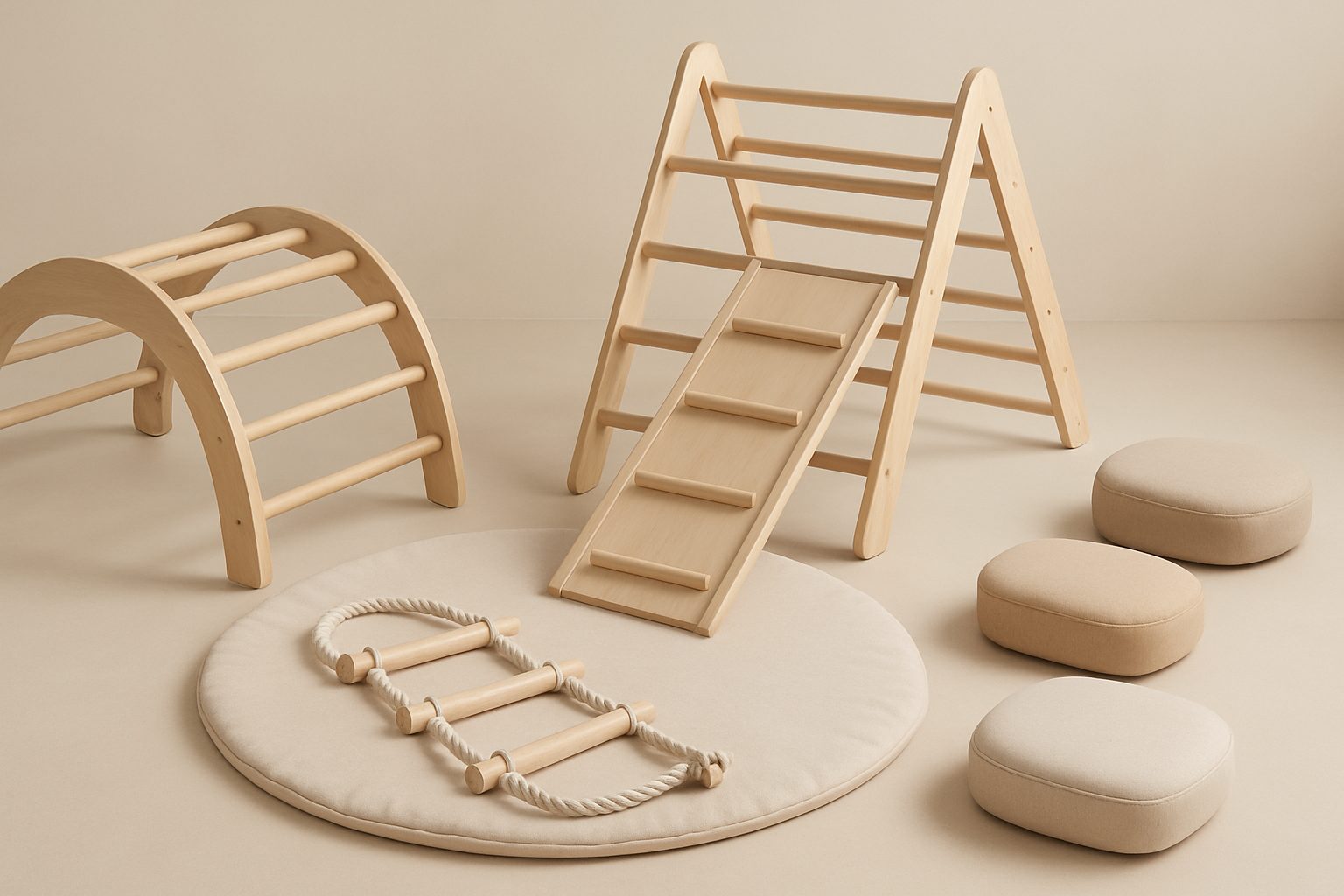
Best Indoor Climbing Frames UK 2025: Top Picks for Every Budget & Age
If you're shopping for an indoor climbing frame, you'll find yourself facing a bewildering range of options. Some are compact and simple; others sprawl across your living room like miniature adventure playgrounds. The price range is equally broad, from under £100 to well over £400. What actually separates a good frame from one your child will ignore after a fortnight?
Indoor climbing frames aren't just about keeping kids occupied on rainy days—though that's certainly a bonus. Regular climbing builds strength, coordination, and spatial awareness whilst reducing screen time. The challenge is finding one that suits your space, your child's age, your budget, and your tolerance for clutter.
This guide covers eight to ten genuinely popular and well-reviewed frames across every budget tier, organised to help you navigate the decision quickly.
What to Look for in an Indoor Climbing Frame
Before diving into individual products, here's what actually matters:
Safety: Look for frames that meet EN1176 standards (European safety standards for playground equipment). Most reputable UK manufacturers have this certification. Check for stable bases, rounded edges, and secure joints. A wobbly frame isn't worth any price.
Space: Measure your actual available space honestly. A frame that dominates your room and blocks natural movement becomes an eyesore rather than a feature. Height matters too—check ceiling clearance before ordering.
Age range: Frames rated for 2–6 year-olds are quite different from those for 6–10 year-olds. Growth headroom is tempting but wasted money if the frame feels unsafe for smaller children.
Material and durability: Wooden frames age well and look less plastic-y, but require more maintenance. Metal and composite frames are lower-maintenance but may feel more institutional. Both can be durable if well-made.
Adjustability: Some frames let you add or swap modules. This matters if you expect your child to grow with it or if siblings of different ages will use it.
Assembly and storage: Be realistic about whether you'll actually disassemble and store it seasonally, or whether it'll live in your room permanently.
Budget Options (Under £100)
At this price point, expect smaller, simpler frames suitable for younger children or tight spaces. Most are plastic or lightweight metal constructions.
Plum Climbing Dome: A compact plastic geodesic frame roughly 150cm in diameter. Decent for toddlers and young nursery-age children. Lightweight, easy to move, and the minimalist design means it doesn't visually overwhelm a room. Won't challenge a confident climber but works well as a first frame.
Homebase Metal Indoor Climbing Frame: Basic metal A-frame with fabric mesh sides. Simple assembly, stable base. Limited climbing variety but sturdy enough for 2–5 year-olds. Not exciting, but reliable value.
Mid-Range Options (£100–£250)
This is where you get genuine climbing variety—multiple routes, more height, and better build quality.
Smoby Climbing Jungle Gym: Metal frame roughly 180cm tall with slides, climbing walls, and multiple ways up. Popular because it offers more engagement than basic frames. Prone to rust if not maintained; store the slide indoors in winter. Good for 3–8 year-olds.
TP Swing Plus Climber: A wooden frame with solid construction and a clean, Scandinavian aesthetic. Includes a swing attachment point and climbing holds. Takes up more visual space than plastic alternatives but looks less toy-like in a room. Best for 5–10 year-olds. Requires some seasonal maintenance (treating wood) but ages beautifully.
Plum Outdoor/Indoor Climbing Wall: A flat wall-mounted climbing frame with holds, marketed as suitable for indoor use. Space-efficient if wall mounting is feasible. More challenging than dome climbers, good for developing actual climbing skills. Works well for 6+ years if you're committed to proper wall installation.
KidKraft Montessori Climbing Frame: Wooden frame with a natural finish, inspired by Montessori principles. Smaller footprint than sprawling gym setups. Quieter and less visually dominating than plastic alternatives. Reviews consistently praise its stability. Suitable for toddlers through to age 8.
Premium Options (£250+)
Expect more complex structures, better materials, and genuine longevity here.
Decathlon Domyos Climbing Frame: One of the few premium frames with a genuinely minimalist design. Metal construction, modular design allows you to add components. Very stable; reviews rarely mention wobbly joints. Pricey for what is essentially a fancy jungle gym, but quality build justifies it for families wanting something that lasts through multiple children.
Wickey Climbing Cube XL: Wooden frame with sand-coloured cladding, modular design, and multiple climbing routes. This is genuinely ambitious—tall, complex, and designed to grow with your child through adding slides and swings. Best for 4–10 year-olds. Takes real space but offers lasting engagement.
Squirrel Monkey Climbing Frame: Premium wooden construction with excellent joinery and a tight, stable feel. Multiple climbing routes and a rope component. Design is intentionally compact without feeling cramped. One of the better frames for long-term durability, though it's positioned firmly in the investment category.
A Quick Comparison Table
| Frame | Price | Age Range | Best For | Space Needed | |-------|-------|-----------|----------|--------------| | Plum Dome | £70–90 | 2–5 | Small spaces, first frame | Minimal | | Homebase Metal | £80–100 | 2–5 | Budget-conscious buyers | Compact | | Smoby Jungle Gym | £150–200 | 3–8 | Variety, slides | Generous | | TP Swing Plus | £180–220 | 5–10 | Wooden aesthetic | Medium–large | | KidKraft Montessori | £120–160 | Toddler–8 | Design-conscious homes | Compact–medium | | Decathlon Domyos | £250–300 | 4–10 | Minimalism, longevity | Medium | | Wickey XL Cube | £280–350 | 4–10 | Complex climbing, growth | Generous | | Squirrel Monkey | £300–400 | 3–10 | Investment piece, durability | Medium–large |
Final Thoughts
The "best" climbing frame isn't the most expensive or feature-heavy—it's the one your child will actually use, that fits your home without dominating it, and that matches their current development stage. A £90 frame your child loves is better than a £300 frame gathering dust in the corner.
Budget frames are genuinely adequate for younger children. Mid-range frames offer better complexity and durability without breaking the bank. Premium frames make sense only if you value longevity and have space for it.
Start by honestly assessing your available space, your child's age and climbing confidence, and how long you expect to use the frame. Then choose accordingly. You'll find that simplicity and stability matter far more than Instagram-worthy design.
More options
- Indoor Climbing Frames – General UK (Amazon UK) (Amazon UK)
- Toddler & Baby Climbing Frames UK (Amazon UK) (Amazon UK)
- Wooden Indoor Climbing Frame & Play Gym (Amazon UK) (Amazon UK)
- Freestanding Kids Climbing Wall & Boulder Panel (Amazon UK) (Amazon UK)
- TP Toys & Plum Play Indoor Frames (Amazon UK) (Amazon UK)