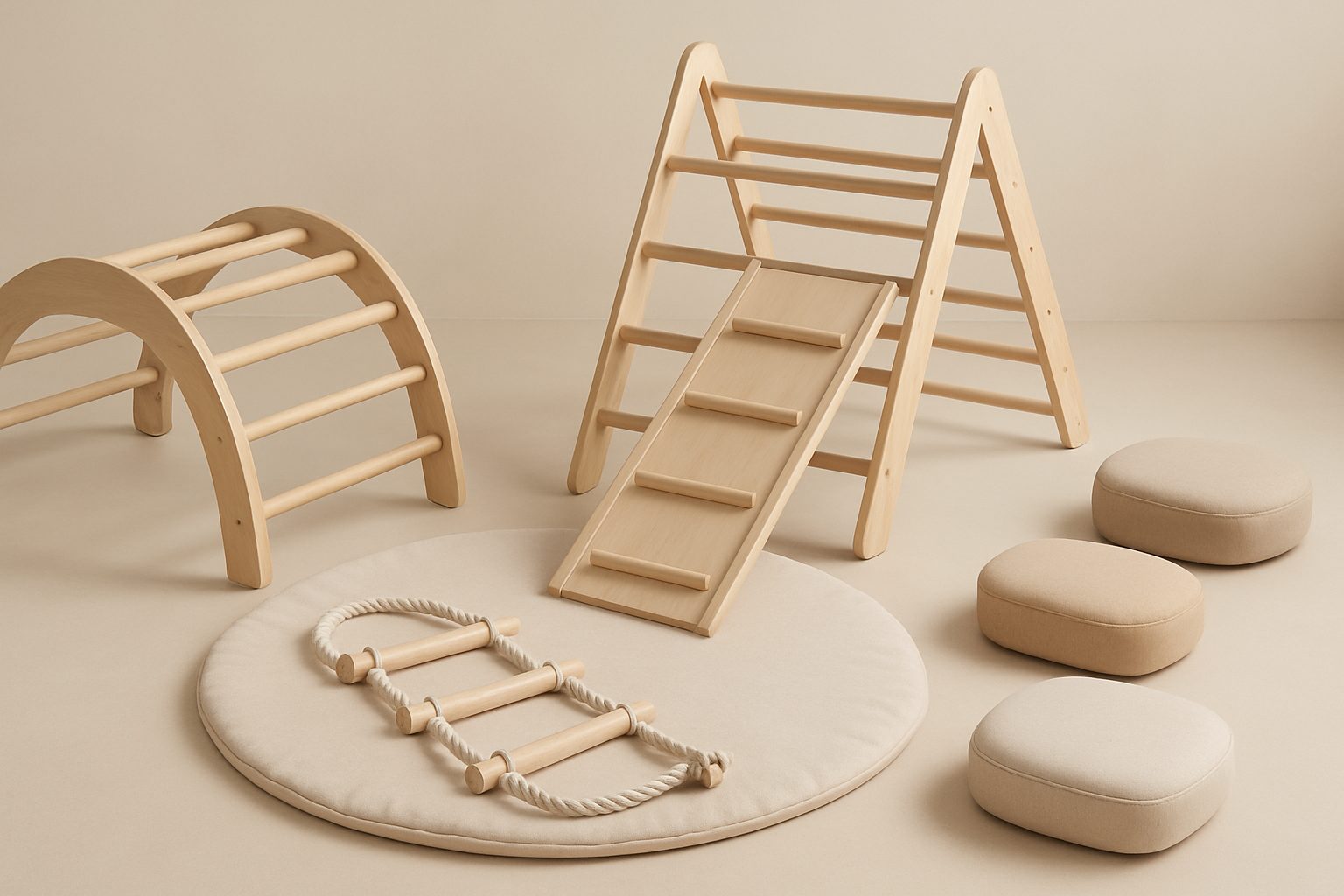
Best Indoor Climbing Frames for Under 5s UK: Safe, Fun & Developmentally Ideal
If you've got a toddler with endless energy and a habit of clambering onto every piece of furniture, an indoor climbing frame might be the answer you've been looking for. Beyond burning off steam on rainy days, climbing equipment plays a genuine role in gross motor development—building strength, balance, spatial awareness, and the confidence that comes with mastering physical challenges.
The trick is finding something age-appropriate, genuinely safe, and worth the space it takes up in your living room. Here's what you need to know.
Why Indoor Climbing Matters for Young Children
Climbing is a fundamental movement pattern. Young children naturally seek it out, and controlled climbing structures give them space to do so safely. They develop leg and core strength, hand-eye coordination, and proprioception (body awareness). They also learn to judge risk and manage their own limits—essential foundations for confident, independent movement as they grow.
Indoor frames also serve a practical purpose: they channel that restless energy indoors during British winters, on sick days, or when weather makes the garden unusable.
Climbing Frames for Ages 1–2 Years
In this age group, you're looking for very low structures. Children are still developing balance and may climb clumsily; falls from height are a real concern.
What to look for:
- Maximum height of 60–90 cm
- Wide, stable base (low centre of gravity)
- Soft landing beneath—foam mats or thick gym mats are standard
- No sharp edges, small parts, or gaps that could trap fingers or head
- Non-toxic finishes; you can assume your toddler will mouth everything
Feature focus: At this age, children benefit most from simple structures—a low ramp, a few rungs to climb, perhaps a small slide. Complexity isn't the goal; safe repetition is.
Products in this category typically include compact wooden climbing cubes, low-level fabric-covered climbing structures, or basic gym-style equipment. Cost ranges from £80–250. Many parents find that a well-made climbing cube offering 2–3 different ways to climb (ramp, ladder, slide) provides months of engagement.
Safety consideration: UK toy safety regulations (BS EN 71-1, which covers mechanical and physical properties) require that structures withstand the force of a child climbing and falling on them. Look for products stamped with CE marking and explicitly stating compliance with BS EN standards—this ensures the wood or metal can handle the stress, and finishes are non-toxic.
Climbing Frames for Ages 3–4 Years
By 3, most children are more coordinated, stronger, and bolder climbers. They can tackle taller, more complex structures and benefit from multiple challenge points—different climbing routes, varying difficulty.
What to look for:
- Height of 100–150 cm (still modest, but noticeably taller)
- Multiple climbing methods—nets, ropes, angled ladders, bars
- Sturdy construction; toddlers at this age can climb quickly and with surprising force
- Wide, well-anchored base or wall-mounting options if space is tight
- Again: non-toxic finishes and no pinch points
Feature focus: Children this age enjoy variety. A frame offering 4–5 different climbing routes holds interest longer. Some frames include platforms or bridges mid-structure, adding an element of problem-solving ("How do I get across?").
Products include wooden climbing gym kits, metal-framed jungle gym-style structures, and modular systems that grow with your child. Cost ranges from £200–600 for quality options. Many are designed to be wall-mounted, which saves floor space.
Development angle: At 3–4, children are building sustained strength and learning to sequence movements—a real cognitive and physical leap. A frame that requires them to plan a route (rather than just repetitively climbing the same ladder) supports this development.
Durability and Compliance
A frame you'll use for two or three years, then pass on, needs to last. Hardwoods (pine, birch, beech) are standard and reliable. Metal frames are equally durable but can become uncomfortably hot in summer sun near a window—worth considering.
All frames sold in the UK should display CE marking and ideally state compliance with relevant British Standards. This isn't a guarantee that nothing bad will ever happen, but it means the structure has been stress-tested and finishes are non-toxic. If you're buying second-hand, you can't verify this—new products are safer bets.
Setting Up Safely at Home
Beyond the frame itself:
- Place it on a level floor, ideally with at least 60 cm clearance on all sides
- Use a thick foam mat (minimum 5 cm) or interlocking gym mats beneath
- Avoid placing it directly under low ceiling fixtures or next to sharp furniture corners
- Watch young children use it—don't expect unsupervised play to be safe until they're older
What to Choose
For ages 1–2, prioritise simplicity and minimal height. A wooden climbing cube or low gym structure with a ramp and slide is ideal—it doesn't take up excessive space and offers enough variety to hold interest without overwhelming a young climber.
For ages 3–4, a frame with multiple climbing routes and 100–150 cm height offers genuine developmental benefit. Wooden climbing gym kits and modular systems here represent good value; many can be sold on or passed down, offsetting the initial cost.
Look specifically for frames marketed for toddlers and young children, rather than older-kid jungle gyms. The smaller dimensions aren't just marketing; they're genuinely safer and more age-appropriate.
Ready to Choose?
Start by measuring your available space and being honest about your budget. Then look for frames with CE marking, clear UK safety compliance, and reviews from parents of children the same age as yours. Your toddler might spend 30 minutes every day on it, or become mildly interested and move on—but you'll know you've given them a safe space to climb, explore, and build the physical confidence that matters.
More options
- Indoor Climbing Frames – General UK (Amazon UK) (Amazon UK)
- Toddler & Baby Climbing Frames UK (Amazon UK) (Amazon UK)
- Wooden Indoor Climbing Frame & Play Gym (Amazon UK) (Amazon UK)
- Freestanding Kids Climbing Wall & Boulder Panel (Amazon UK) (Amazon UK)
- TP Toys & Plum Play Indoor Frames (Amazon UK) (Amazon UK)