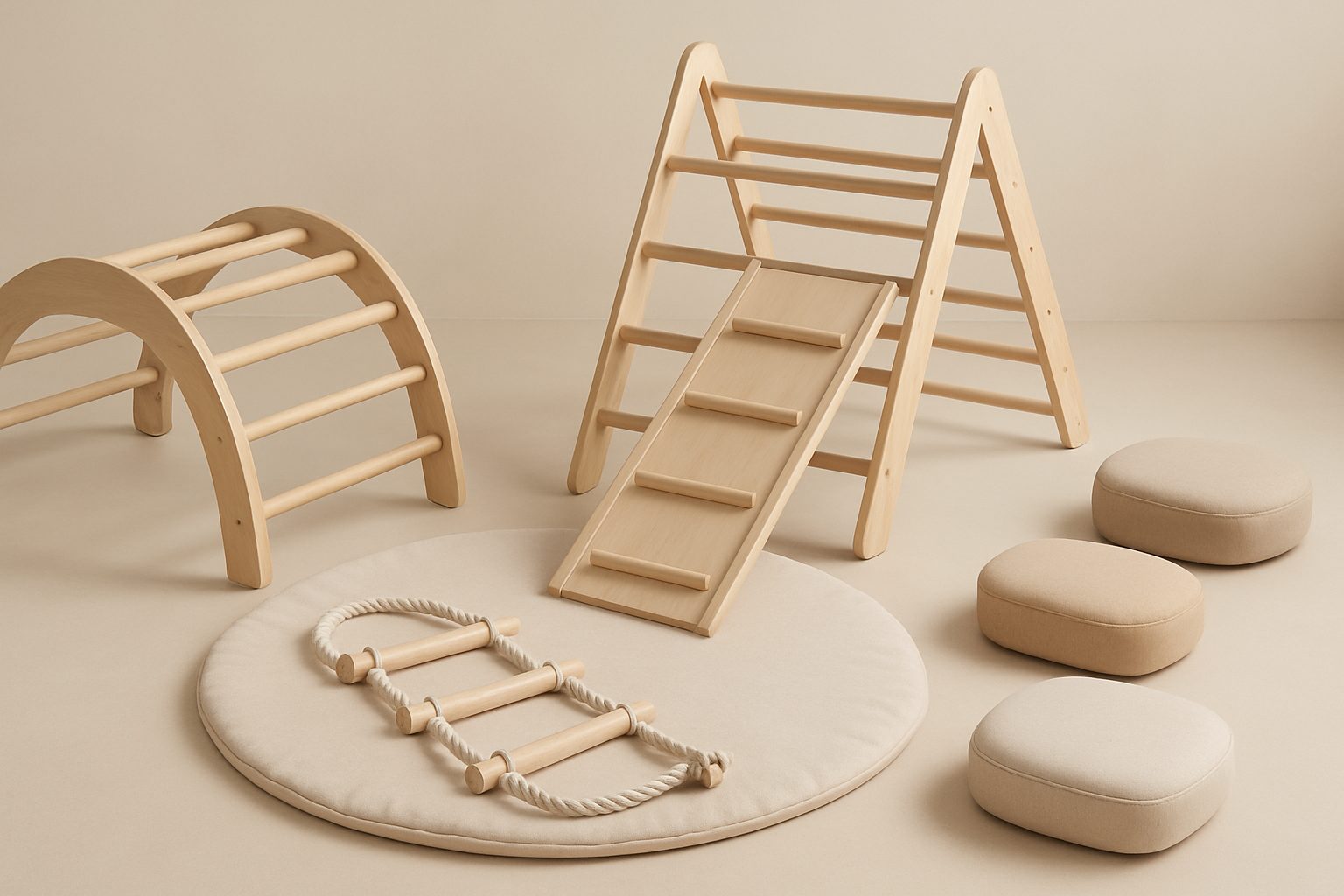
How Indoor Climbing Frames Benefit Your Child's Development (UK Expert View)
Indoor climbing frames have become increasingly popular in UK homes, and for good reason. Beyond keeping children entertained on rainy days, they offer measurable developmental benefits that support physical, cognitive, and emotional growth. If you're considering one for your home, understanding what your child actually gains from climbing play helps you make an informed choice.
Physical Development: Building Real Strength and Control
Climbing is one of the few activities that engages your child's entire body in a coordinated way. When climbing, children use their legs to push, arms to pull, and core muscles to maintain balance—developing strength that translates to everyday movement.
This is different from passive play. Instead of following a fixed movement pattern (like on a slide), climbing requires constant problem-solving: where to place the next hand, how much force to use, whether a route is manageable. This builds functional strength, not bulk, and improves muscular endurance without the monotony of formal exercise.
The variation matters too. A frame with different climbing angles, rope sections, and grips trains multiple movement patterns. A child climbing a near-vertical panel develops different strength than one traversing a sloped wall. Over time, this variety prevents the muscle-imbalance issues that can develop from repetitive single-plane activities.
Proprioception: Understanding Where Their Body Is
Proprioception—the sense of where your body is in space—is fundamental to coordination, confidence, and injury prevention. Climbing naturally strengthens this awareness because the activity requires constant feedback. A child reaching for a hold must estimate distance, adjust grip strength mid-movement, and respond to subtle shifts in balance.
This matters more than it might sound. Children with weak proprioceptive awareness often appear clumsy, struggle with handwriting control, or feel anxious in crowded spaces. Regular climbing practice, through repeated challenge and adjustment, helps refine this sense. You'll often notice improvements in balance, writing posture, and how confident children appear moving through their environment.
Risk Assessment and Resilience
A climbing frame is one of the few places where children face natural, graduated risk in a relatively safe environment. A child learning to climb faces real consequences—a slip means falling onto padded flooring rather than injury. This teaches something that supervision alone cannot: how to assess difficulty honestly, understand personal limits, and recover from small setbacks.
This is crucial. Overprotected children often lack accurate risk assessment, leading to either excessive caution or poor judgement. A child who's climbed from ground level to three feet, felt wobbly, and learned to either stay safe or climb back down has developed actual risk literacy. They've learned what their body can manage.
The psychological payoff is significant. Each time a child tackles a slightly harder route and succeeds, or fails safely and tries differently, they build genuine confidence. This isn't false praise—it's earned through real challenge.
Confidence Through Mastery
Unlike many structured activities, climbing offers clear progression without external judgment. A child can repeat a climb they've mastered for the sheer pleasure of competence, then attempt something harder when ready. There's no "failing" a climbing session; there's only "not yet."
This autonomy matters. Children who choose their own challenge level, work through frustration independently, and experience success develop stronger intrinsic motivation. Over weeks, you'll often see a noticeable shift in how children approach difficulty: frustration drops, persistence increases, and they become more willing to try new challenges elsewhere.
Supporting Emotional Regulation and Play
Physical activity, particularly climbing which requires focus, is proven to support mood regulation and reduce anxiety. The NHS guidance on active play recommends children get varied movement throughout the day—climbing frames fit this perfectly. The concentration required, combined with the physical exertion, creates a natural outlet for restless energy and excess tension.
Beyond this, climbing play often leads to imaginative scenarios. A frame becomes a castle, ship, or mountain depending on the child's mood. This blend of physical challenge and imaginative play supports both development and genuine enjoyment.
Alignment with UK Health Guidance
The UK NHS recommends that children aged 5-18 engage in at least 60 minutes of moderate-intensity activity daily. Many children fall short, particularly with screen time increasing. An indoor climbing frame removes environmental barriers—it's available regardless of weather, daylight, or season. This makes it genuinely useful for meeting activity recommendations.
The NHS also emphasises variety in movement. A good climbing frame, particularly one with mixed angles and features, encourages this variety naturally.
Choosing With Purpose
Not all frames deliver these benefits equally. The most effective ones offer:
- Multiple challenge levels so children can progress gradually
- Mixed climbing angles (vertical, sloped, overhanging) for varied strength development
- Safe fall surfaces so children can focus on climbing rather than fear
- Enough height to provide real challenge without excessive risk
What Comes Next
If you're interested in exploring indoor climbing frames further, our buyer's guide walks through what to look for based on age and space. We've also written about sensory features in climbing frames—how texture, angle variety, and movement types support children with different developmental needs.
The core truth: climbing frames aren't just entertainment. They're legitimate tools for physical and emotional development that align with expert guidance on child wellbeing.
More options
- Indoor Climbing Frames – General UK (Amazon UK) (Amazon UK)
- Toddler & Baby Climbing Frames UK (Amazon UK) (Amazon UK)
- Wooden Indoor Climbing Frame & Play Gym (Amazon UK) (Amazon UK)
- Freestanding Kids Climbing Wall & Boulder Panel (Amazon UK) (Amazon UK)
- TP Toys & Plum Play Indoor Frames (Amazon UK) (Amazon UK)