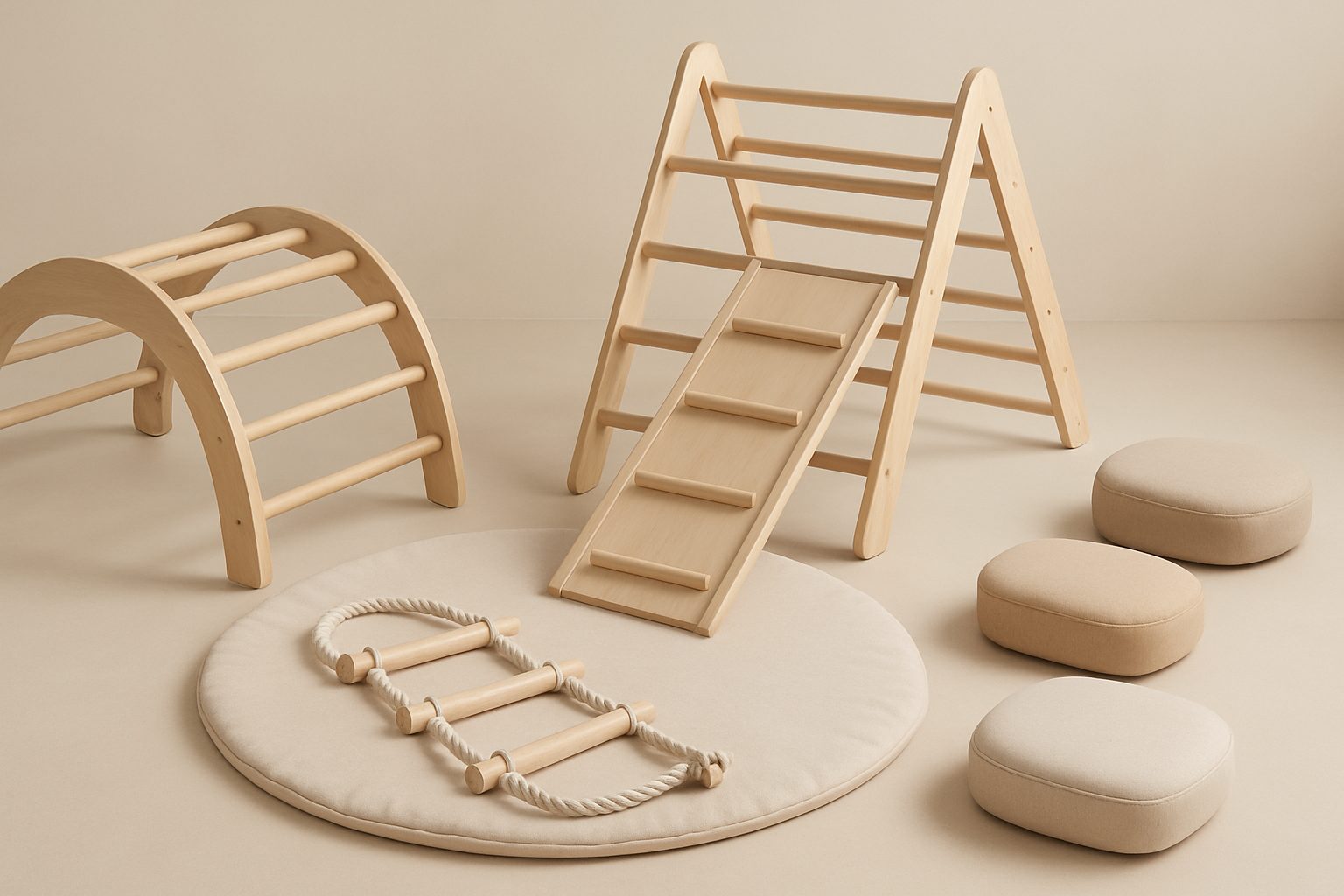
Indoor Climbing Frame Safety UK: What Every Parent Must Know Before Buying
Climbing frames are brilliant for children's physical development—they build strength, balance, and confidence. But a poorly chosen or badly installed frame poses real injury risks. Before you buy, you need to understand UK safety standards, proper installation, and age-appropriate sizing. This guide walks you through what actually matters.
Why Safety Standards Exist
Every year, thousands of children attend A&E with climbing-frame injuries. Most are preventable. The standards that govern climbing frames—particularly EN 71-8:2012 for swings and gym equipment—exist because manufacturers and safety regulators have learned what goes wrong: falls from height, gaps that trap limbs, instability, and inadequate impact protection.
When you buy a climbing frame, you're looking for products that meet British and European standards. If the seller doesn't mention compliance with EN 71 or BSEN 71, ask why. Reputable manufacturers will have test certificates available on request.
Understanding EN 71 and BSEN 71
EN 71 is the European standard for toy safety; BSEN 71 is its British equivalent. For climbing frames, the relevant standard is typically EN 71-8:2012 (swings, slides, seesaws, and similar equipment) or EN 1176 (playground equipment safety).
What these standards actually check:
- Structural integrity: Can the frame handle repeated stress without warping or breaking?
- Fall protection: Is the area around the frame clear, and is the ground protection adequate?
- Entrapment hazards: Are there gaps that could trap a child's head, neck, or limbs?
- Sharp edges and protrusions: All edges and fasteners must be rounded or covered.
- Stability: The frame must resist tipping even with dynamic movement.
Look for frames marketed with CE marking and explicit reference to EN 71 compliance. Cheaper imports sometimes skip these certifications; they're not worth the risk.
Safe Anchoring: Non-Negotiable
A climbing frame that isn't properly anchored is a tipping hazard. Children naturally shift their weight asymmetrically—they'll hang to one side, swing, and scramble unpredictably. Without anchoring, even a sturdy-looking frame can topple.
If you have a wooden or metal frame:
- Use a secure bolt-down system into solid flooring. For most homes, this means concrete foundations. If you're bolting to decking or wooden floors, you'll need to reinforce underneath with cross-beams to distribute the load.
- Concrete expanding bolts (minimum M12 diameter, spaced at least 1 metre apart) are the standard approach. Don't scrimp on fastener quality.
- Check the manufacturer's guidance for bolt placement; they've tested this. If you improvise, you void safety.
For softer ground (grass, earth, or sand):
- Ground anchors or metal pins work, but they're less reliable long-term. Frost heave in winter can loosen them. Check them monthly.
- Some frames come with concrete base feet. These are better than nothing, but they're really suitable only for lighter frames used occasionally.
The safest approach: bolt down to concrete, even if it means installing a small concrete slab specifically for the frame.
Flooring and Impact Absorption
The area directly beneath and around the frame must absorb falls. This isn't optional—it's the difference between a bruise and a serious head injury.
Adequate fall surfaces:
- Bark mulch or wood chips: 20–30 cm depth (depending on fall height), regularly topped up. It settles quickly.
- Engineered safety tiles or mats: Expensive but durable and consistent. Look for products tested to EN 1177, which rates impact absorption by fall height.
- Safety flooring: Rubber tiles or synthetic surfaces rated for your frame's maximum height. A 1.5-metre frame needs flooring rated for 1.5-metre falls.
What doesn't work:
- Concrete, tarmac, or paving alone. These cause serious injuries even from modest heights.
- Thin rubber mats over hard ground. They compress and become ineffective quickly.
- Grass or bare earth. They don't absorb impact reliably.
The impact-absorption requirement extends beyond directly under the frame. Most standards recommend a safety zone extending 2 metres from any edge.
Age and Height: Matching Frame to Child
Frames have weight limits and recommended age ranges; these reflect both structural limits and developmental appropriateness.
- Under 4 years: Keep frames under 1 metre high. Toddlers lack the spatial awareness and falling reflexes to handle higher structures safely.
- 4–6 years: Up to 1.5 metres is reasonable if the frame is well-designed (chunky rungs, stable handholds, good sight lines).
- 7+ years: Older children can manage taller frames, but supervise younger siblings playing nearby—a 5-year-old climbing on a frame built for 10-year-olds is a hazard.
Weight limits exist because frames are engineered for specific loads. Going beyond them stresses joints and bolts. Respect them.
Installation and Maintenance
A well-built frame neglected after installation becomes unsafe.
On installation:
- Don't skip assembly steps to save time. Missing washers or half-tightened bolts accumulate into hazards.
- Check that the frame is level. A slightly tilted frame strains fasteners unevenly.
- Test stability yourself before children use it—shake and push it hard.
Ongoing checks (monthly during use):
- Inspect bolts and fasteners for looseness. Rust and vibration loosen them over time.
- Check for cracks in wood or bending in metal.
- Top up fall-surface material. Bark and mulch compact; don't wait until there's barely any coverage.
- Clear fallen branches, toys, and clutter from the impact zone.
What Safe Frames Look Like
Reputable commercial climbing frames from established UK and European manufacturers include Plum Play, Wickey, and TP Toys. Not because they're the only safe options, but because they publish test certificates, design with standards in mind, and replace defective parts. Their instruction manuals are detailed and include bolt specifications.
Cheaper frames from online marketplaces sometimes lack clear documentation. That's a red flag.
Summary
A safe climbing frame isn't complicated. It's one that meets standards, is properly bolted down, sits on adequate fall protection, matches your child's age and ability, and is maintained regularly. Check compliance, don't cut corners on installation, and inspect it monthly. A well-chosen frame will deliver years of active play without serious injury.
More options
- Indoor Climbing Frames – General UK (Amazon UK) (Amazon UK)
- Toddler & Baby Climbing Frames UK (Amazon UK) (Amazon UK)
- Wooden Indoor Climbing Frame & Play Gym (Amazon UK) (Amazon UK)
- Freestanding Kids Climbing Wall & Boulder Panel (Amazon UK) (Amazon UK)
- TP Toys & Plum Play Indoor Frames (Amazon UK) (Amazon UK)