Indoor vs Outdoor Climbing Frames UK: Which Is Right for Your Family?
Choosing between an indoor and outdoor climbing frame is one of the bigger decisions you'll make when investing in your child's play equipment. Both have genuine merit, and the right choice depends entirely on your circumstances—your garden space, local weather patterns, how much you're willing to spend upfront, and what happens when the frame sits unused in five years' time.
The Cost Reality
Outdoor frames are typically cheaper to buy. A solid hardwood or metal climbing structure runs £200–£600 for family-sized models, with budget options starting around £150. You're paying for straightforward construction and materials that aren't engineered for year-round exposure in the worst of British weather.
Indoor frames cost more—usually £400–£1,200—because they're built for intensive, daily use in confined spaces. They're engineered to withstand repetitive impact, have better joinery, and often include safety matting as part of the package. If you're buying a compact indoor frame, cost-per-use often works out lower because it'll genuinely get used in January and February, not abandoned under a tarpaulin.
There's also the hidden cost of outdoor maintenance. Weather-resistant treatments, replacements for rotted wood, rust removal, and repainting add £50–£150 annually over the frame's lifespan.
Space Constraints
This is where the decision often sorts itself.
An outdoor frame needs breathing room—you want at least a metre of clearance on all sides, ideally more. A typical garden structure occupies 2.5 × 2.5 metres of usable space, though compact models exist. If your garden is less than 4 × 4 metres or already crowded with a trampoline, shed, and washing line, outdoor placement is difficult.
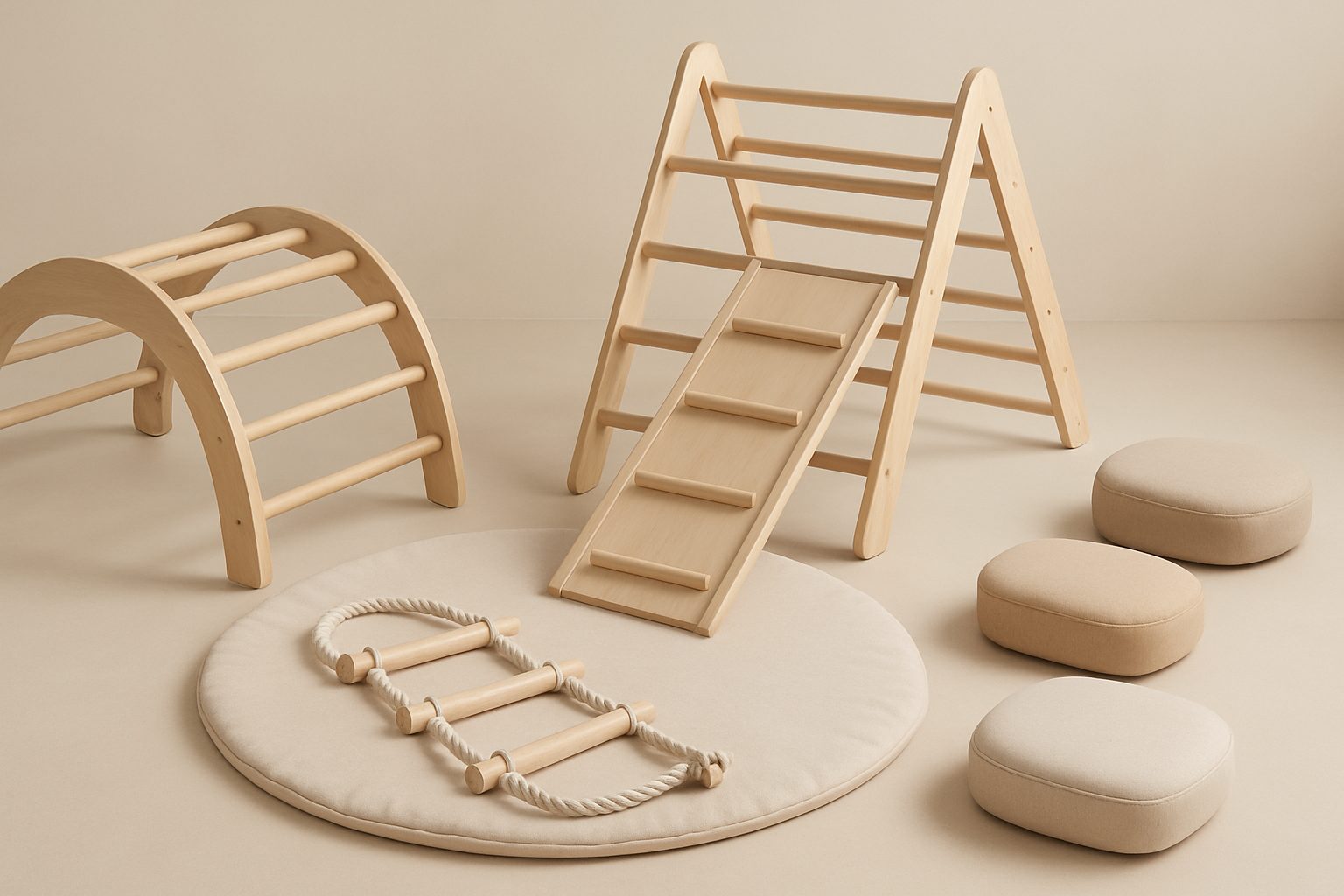
Indoor frames are designed to nestle into living spaces. Wall-mounted bars, ceiling-hung equipment, and modular systems fit into corners, recessed alcoves, or even under stair wells. A small indoor climbing wall or ladder system takes up 1.5 × 1 square metres. This is the genuine win for urban families or anyone with a tight garden.
Weather and Year-Round Use
British weather is the elephant in the room with outdoor climbing frames.
Rain itself isn't the killer—good wood treatments and metal coatings handle moisture. The real problem is the combination: wet wood becomes slippery (dangerous), damp equipment gets moss and algae growth (slippery and rank-looking), and freeze-thaw cycles over winter damage wood grain and crack joins. A well-maintained outdoor frame lasts 7–10 years; a neglected one degrades to something unsafe in 3–4 years.
Practically speaking, an outdoor frame is genuinely usable perhaps 180–200 days a year in the UK. May through September, absolutely. April and October, probably. November through March—realistically, your kids won't use it unless they're unusually keen and you're actively managing conditions.
Indoor frames flip this entirely. They're year-round fixtures. Your child uses them in January when it's dark at 4 p.m., on rainy days, during school holidays when they need burning off energy. Over a year, that's easily 300+ days of active use.
Durability and Resale Value
This is where indoor climbing structures win decisively.
An outdoor frame depreciates rapidly. Weather damage is visible to buyers; a used outdoor structure that's been outside three winters is always a hard sell. You'll recover maybe 30–40% of your original purchase cost if you resell.
Indoor equipment—especially modular wall-mounted bars or compact climbing walls—holds value surprisingly well. Because they're indoors, they show less visible wear. Buyers know they weren't exposed to weather damage. You can reasonably expect to recover 50–65% of your cost if you upgrade or no longer need it. Some families treat quality indoor climbing equipment almost like furniture—they swap between houses during moves.
The Decision Framework
Ask yourself these questions in order:
Do I have reliable, unshaded garden space of at least 2.5 × 2.5 metres? If no, indoor is your answer. If yes, continue.
Will my child use this in winter months, or is summer-only fine? Winter use strongly favours indoor. Summer-only? Outdoor is cheaper upfront.
Am I willing to do annual maintenance? Outdoor frames need attention. If that sounds tedious, indoor is lower-friction.
Will I want to move or upgrade this in five years? If resale value matters—especially if you're space-conscious now and may move to somewhere smaller—indoor equipment holds value better.
How much of my budget is actually available? Outdoor frames are a lower entry cost. Indoor systems, while better value over time, require more capital upfront.
Next Steps
If you've landed on indoor, the next decision is format. Wall-mounted bars suit narrow spaces; freestanding climbing structures work in living rooms or playrooms; climbing walls are compact but need dedicated wall space. Read our guide to indoor climbing frames for small spaces to explore options that fit typical UK homes.
If outdoor is your choice, look for hardwood treated to at least a 10-year weatherproofing standard. Metal frames avoid rot but can rust if the coating chips. Check load ratings carefully—climbing equipment takes real impact.
Whichever you choose, the frame you'll use is better than the frame that's perfect on paper but sits gathering moss outside.
More options
- Indoor Climbing Frames – General UK (Amazon UK) (Amazon UK)
- Toddler & Baby Climbing Frames UK (Amazon UK) (Amazon UK)
- Wooden Indoor Climbing Frame & Play Gym (Amazon UK) (Amazon UK)
- Freestanding Kids Climbing Wall & Boulder Panel (Amazon UK) (Amazon UK)
- TP Toys & Plum Play Indoor Frames (Amazon UK) (Amazon UK)