Montessori Indoor Climbing Frames UK: What They Are, Why They Work & Top Picks
Montessori indoor climbing frames have quietly become one of the most popular ways to support active play and independent development at home in the UK. If you've scrolled past the wooden triangles and arches in parenting groups or nursery settings, you might wonder what the fuss is about—especially when a £200+ frame can seem like a lot to spend on something your child might grow out of in a couple of years.
The truth is more nuanced. These frames aren't just climbing toys. They're rooted in decades of child development research and the Montessori philosophy, which emphasises self-directed learning and physical autonomy. This article explains what they actually do, why they matter for your child's development, and how to decide if one is right for your home.
What is a Montessori Climbing Frame?
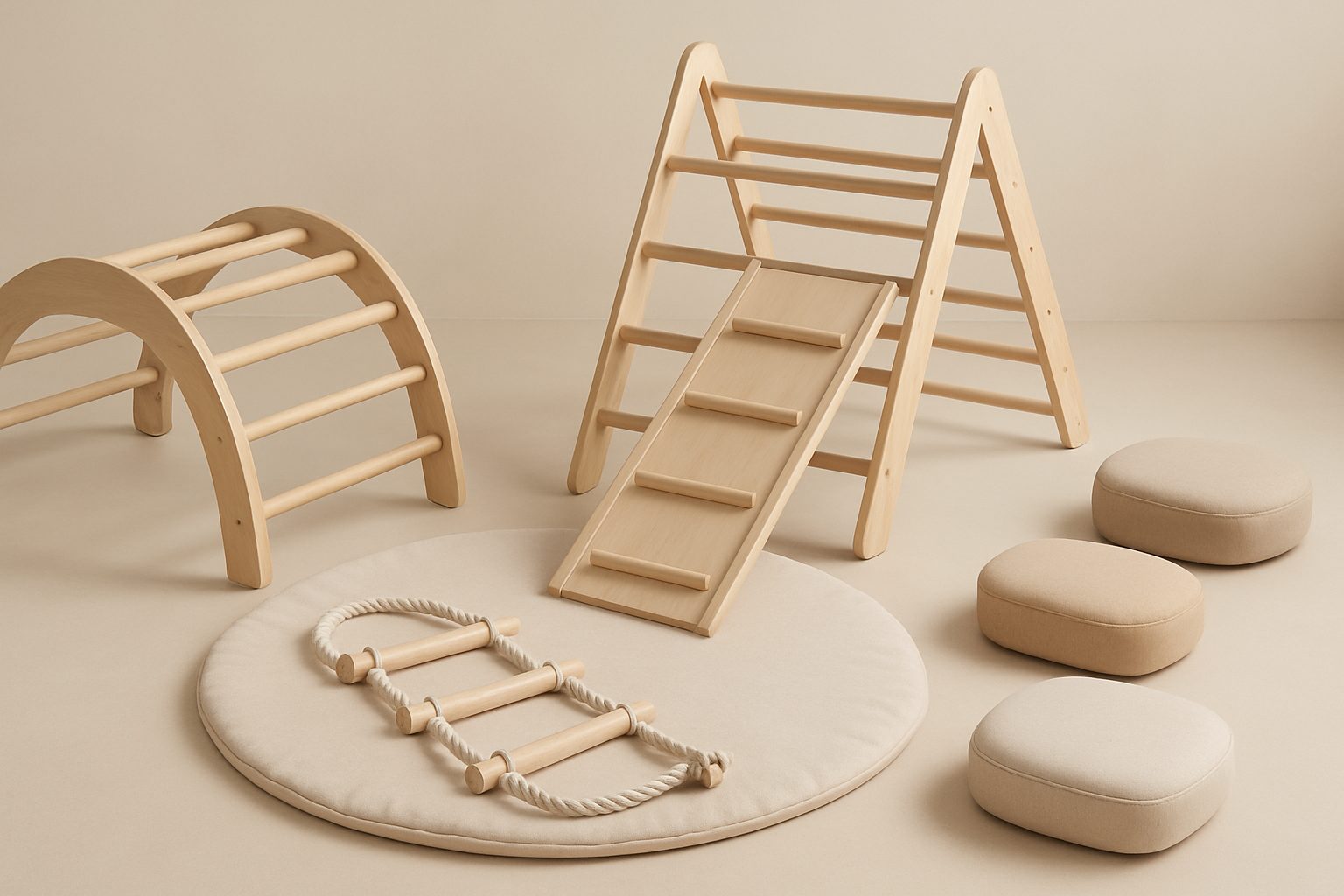
A Montessori climbing frame is a low, open-ended piece of play equipment—typically made from solid wood—that allows toddlers and young children to climb, balance, and explore their physical capabilities independently.
The most common designs are the Pikler triangle (a triangular climbing ramp) and the arch (a curved climbing structure). Both are intentionally simple. No bells, whistles, or plastic characters. Just geometry, wood, and space for movement.
What sets them apart from typical garden climbing equipment is scale and philosophy. Montessori frames are designed for indoor use and younger children (typically 12 months to 5 years). They're low enough that a fall won't cause serious injury, but challenging enough to build real strength and problem-solving.
The Philosophy Behind Climbing Frames
Emmi Pikler, a Hungarian paediatrician, developed the triangle that bears her name in the 1930s. Her core idea: children are capable of far more than we give them credit for, and they learn best when given the freedom to try, fail safely, and try again without adult intervention.
This directly contradicts the "help them up" instinct many parents have. In Montessori practice, you place the frame in a safe space, show minimal interference, and let your child work out how to mount, climb, and descend. They might take weeks to summit it. They might climb it sideways. They might spend a week just standing at the base, figuring out the angles.
That's not a failure. That's learning.
The philosophy extends beyond physical skill. It's about building confidence, developing body awareness, and fostering a sense of "I can do difficult things by myself." Research into child development supports this; children who are given autonomy over physical play tend to develop stronger proprioception (sense of their body in space), better risk assessment, and higher intrinsic motivation toward physical activity.
Developmental Benefits
Climbing frames address several key developmental areas:
Gross motor development — Balance, coordination, strength, and core stability. Climbing engages muscles toddlers rarely use in everyday movement, building the foundation for running, jumping, and sports later.
Body confidence — Through repeated attempts, children learn their own boundaries. They discover what they can and can't do, which reduces both recklessness and unnecessary caution. A child who's climbed a Pikler triangle is more likely to attempt other physical challenges mindfully.
Spatial awareness — Navigating a climbing structure teaches children about angles, height, weight distribution, and three-dimensional space in a tactile way that scrolling through apps simply cannot replicate.
Independence and persistence — There's no "right way" to climb a triangle. This open-endedness means children must problem-solve and persist through difficulty without waiting for instruction.
Vestibular system — Tilting angles and height changes stimulate the inner ear system that governs balance and spatial orientation, critical for developing coordination.
These aren't dramatic changes. You won't see dramatic "before and after" moments. Instead, you'll notice your toddler standing straighter, moving with more certainty, and tackling new physical challenges with less hesitation.
Pikler Triangle vs Arch: What's the Difference?
The Pikler triangle has a fixed angle (usually around 75–85 degrees) that climbers mount from either side. It's more challenging and rewards strategy; younger or less confident climbers might find it intimidating at first.
The arch is curved, which makes it feel more forgiving—less like "conquering" and more like "flowing over." Younger children often take to arches faster, and they're excellent for children who are still building confidence.
Neither is superior. It depends on your child's age, temperament, and available space. A 18-month-old might thrive with an arch. A 3-year-old who loves a challenge might prefer a triangle. Many families add both over time.
Safety, Space & Practical Considerations
Safety isn't really the limiting factor here; falls from these low structures rarely cause more than minor bruises. The real constraints are practical:
Space — A Pikler triangle needs roughly 1.5m × 1.5m of clear floor. An arch slightly less. In a two-bedroom terrace, that's often the living room or playroom.
Flooring — A thick play mat or gymnastics mat underneath is standard. This dampens minor tumbles and prevents the frame sliding across hard floors.
Durability — A quality frame (solid wood, proper joints, no splinters) can be used by multiple children over 5+ years. Cheaper versions often wobble and feel unsafe, which defeats the purpose.
Boredom — Some children engage constantly. Others lose interest after weeks. This is normal and fine; you haven't failed if your child doesn't climb the frame daily.
Getting Started with Your Home Setup
Start by assessing your space honestly. You need a room where the frame can stay up semi-permanently; packing it away each week is impractical and removes the learning opportunity.
Choose a frame that matches your child's current stage, not their aspirational stage. A 12-month-old doesn't need a steep triangle; they need something their smaller, less coordinated body can access.
Most importantly, resist the urge to coach. Place the frame, ensure the floor is safe, and step back. Your child will climb when they're ready.
If your home setup works well and your child is clearly developing strength and confidence, you'll likely want to explore options designed for specific ages and needs—small wonders lead to bigger exploration.
More options
- Indoor Climbing Frames – General UK (Amazon UK) (Amazon UK)
- Toddler & Baby Climbing Frames UK (Amazon UK) (Amazon UK)
- Wooden Indoor Climbing Frame & Play Gym (Amazon UK) (Amazon UK)
- Freestanding Kids Climbing Wall & Boulder Panel (Amazon UK) (Amazon UK)
- TP Toys & Plum Play Indoor Frames (Amazon UK) (Amazon UK)