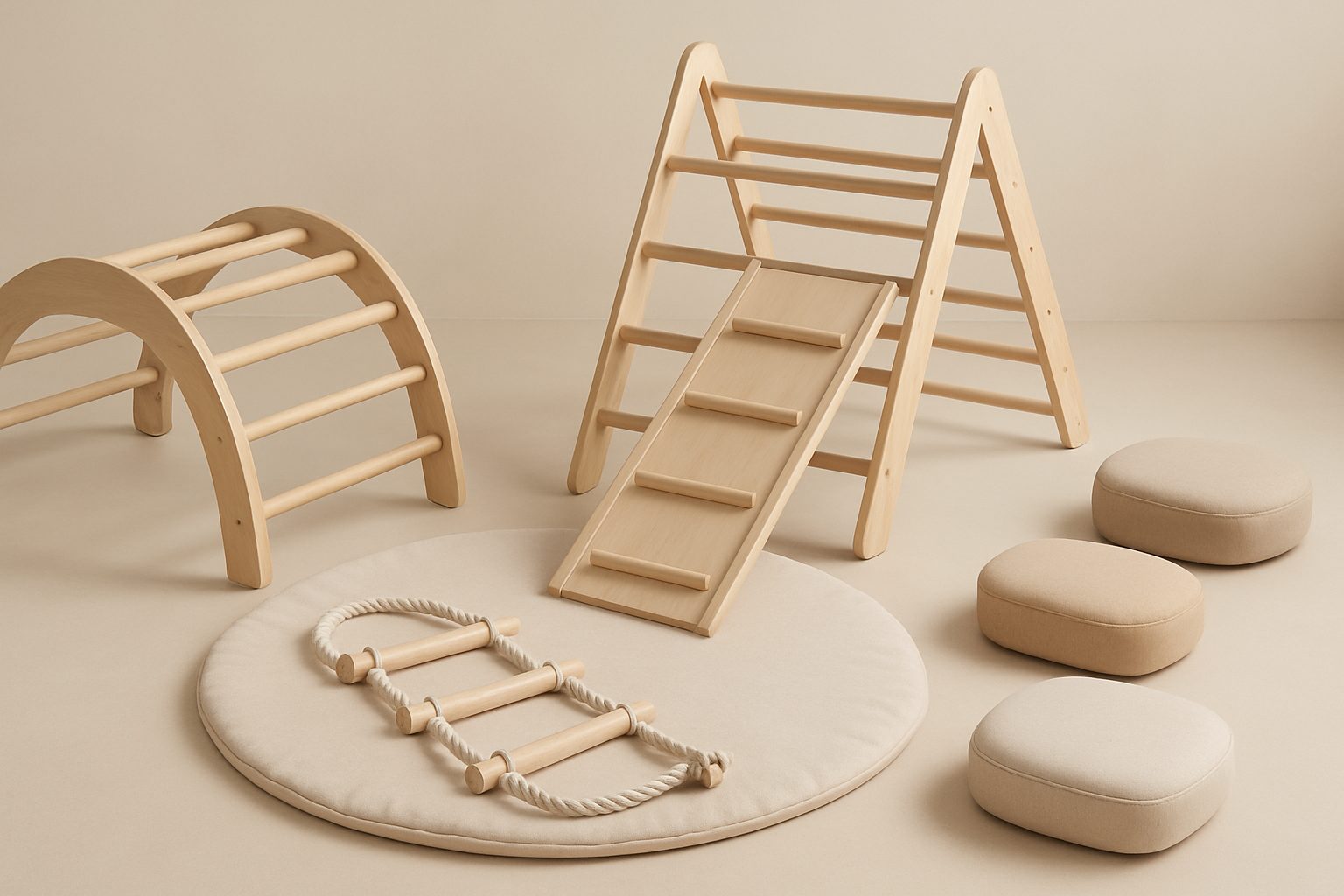
Premium Indoor Climbing Frames UK: 5 Splurge-Worthy Picks Reviewed
When you're looking at indoor climbing frames for young children, the price range spans wildly—from budget flat-pack options under £100 to solid wooden structures pushing £700 or more. The jump isn't arbitrary. Premium frames justify their cost through thoughtful materials, modularity that grows with your child, and the kind of build quality that lasts through multiple children without wobbling or splintering.
If you're spending properly on one, you want it to last from toddler to school age without constant repairs, expand as your child becomes more confident, and be genuinely safe to use daily. That's what separates a premium frame from a cheap one.
Why Premium Climbing Frames Make Financial Sense
A decent frame from a reputable maker—built from FSC-certified beech or similar hardwood with proper joinery—will genuinely outlast cheaper rivals by years. Cheaper frames use untreated pine, thinner dowels, and basic butt joints that loosen after months of heavy use. Premium versions use properly kiln-dried timber, quality dowel construction, and often modular designs that let you add sections rather than replacing the whole thing.
Weight capacity matters more than marketing suggests. A frame rated to 50 kg becomes genuinely risky once your child hits 40 kg—the margin for dynamic movement vanishes. Premium frames commonly offer 80–100 kg capacity, meaning they're safe through the early primary years. That translates to actual value if you're not buying again in two years.
1. Pikler Triangle (Gonge/Roba Variants)
The original Pikler design remains the gold standard for a reason. The beech wood construction is rock-solid, and the steep angle—designed by paediatricians—encourages genuine climbing rather than just hanging. The 100 cm height suits roughly two to six years old.
Expect to pay £250–£350 for a genuine Gonge or quality Roba variant. They're deceptively simple, which keeps costs lower than more complex frames, but the engineering is precise. Dowels are thick, joints are tight, and the wood feels premium. The slat spacing is carefully calculated for small hands and feet.
The main trade-off: they're not modular. You can't expand them or adapt the angle. For some families, that simplicity is fine. For others, it means outgrowing them.
Pros: Timeless design, durable, safe angle, genuine beech Cons: Non-modular, limited by height restrictions, takes space even after outgrown
2. Multikids Climbing Cube (Modular System)
This Danish-designed system uses FSC beech and offers genuine modularity. The basic cube structure starts around £400–£500, then you add ramps, nets, bars, and climbing panels as your child progresses. You're essentially building a bespoke playground.
The quality is consistent—thick dowels, proper mortise joints, and beech that's clearly been pressure-treated for durability. The real advantage is that you're not locked into one configuration. A two-year-old might use it as a simple climbing box; by five, you've added panels and bars to create a more complex challenge.
Weight capacity hits 80 kg across the system, which is respectable. The modular approach means you can sometimes sell individual components if you eventually downsize, recovering some cost.
Pros: Truly modular, high build quality, grows with your child, FSC timber Cons: Expensive to fully expand, requires more floor space as you add modules, assembly can be fiddly
3. Haba Climbing Favorit (Wooden Frame)
Haba's Favorit range bridges the gap between simple and complex. It's a wooden A-frame style with multiple bars and climbing options, built from FSC pine and beech. The 90 cm height is modest, so it suits from about 18 months through five years.
At around £450–£550, you're paying for thoughtful engineering and honest materials. The frame includes a climbing bar, rope elements, and ramp options. Wood is smooth and splinter-free; the finish is non-toxic. Dowel thickness is proper—no flimsy stuff.
The catch is that it's not truly expandable in the Multikids sense. You can swap some panels, but you're mostly locked into the Favorit design. It's more "refined climbing frame" than "build your own setup."
Pros: Solid beech and pine, multiple climbing options, compact, safe Cons: Not genuinely modular, height limits utility after age five, higher mid-range pricing
4. Grow.Climbing Compact Frame (Beech & Expandable)
This Dutch brand focuses on beech construction with a genuinely expandable system. The base frame costs around £500–£600, and you can add climbing panels, ramps, or swing bars. Unlike some modular systems that feel like an afterthought, the expansion parts integrate properly—no awkward gaps or mismatched aesthetics.
The wood is beautiful, properly finished, and clearly engineered to last. Joint design is solid; the weight capacity is 100 kg, which is genuinely adequate. The framework allows children to use it unsupervised without anxiety once they're confident.
The downside is availability in the UK—you're often ordering from Europe, which adds cost and delivery time.
Pros: True beech, expandable, high weight capacity, thoughtful design Cons: Import hassles, premium pricing even by premium standards, slower delivery
5. Ikea Mörkrädd Frame with Custom Dowels (Budget-Conscious Premium Option)
If you can't stretch to £600+, a borderline choice is the Mörkrädd, upgraded. The basic frame costs under £100, but it's cheap pine and thin dowels. The honest move: replace all dowels with proper hardwood ones from specialist suppliers (roughly £80–£120 total), reinforce with better screws and corner brackets, and consider staining with a child-safe finish.
You won't match the resale value of genuine premium frames, but you'll create something reasonably safe and durable for under £250. It's not a true premium frame, but it's an honest middle ground if budget's tight.
Pros: Low entry cost, upgradeable, widely available Cons: Base construction is still budget-tier, requires customisation to be safe, no warranty support
The Verdict
Premium climbing frames are worth their cost if you genuinely plan to use them daily and keep them through multiple children. A solid beech frame with 100 kg capacity and modular options will likely outlast three budget frames purchased separately. The safety margin and sustained engagement justify the spend.
If you're unsure about longevity or your child's interest, start with the Pikler or a mid-range option. If you're all-in, the Multikids or Grow.Climbing systems offer genuine versatility and lasting value.
More options
- Indoor Climbing Frames – General UK (Amazon UK) (Amazon UK)
- Toddler & Baby Climbing Frames UK (Amazon UK) (Amazon UK)
- Wooden Indoor Climbing Frame & Play Gym (Amazon UK) (Amazon UK)
- Freestanding Kids Climbing Wall & Boulder Panel (Amazon UK) (Amazon UK)
- TP Toys & Plum Play Indoor Frames (Amazon UK) (Amazon UK)