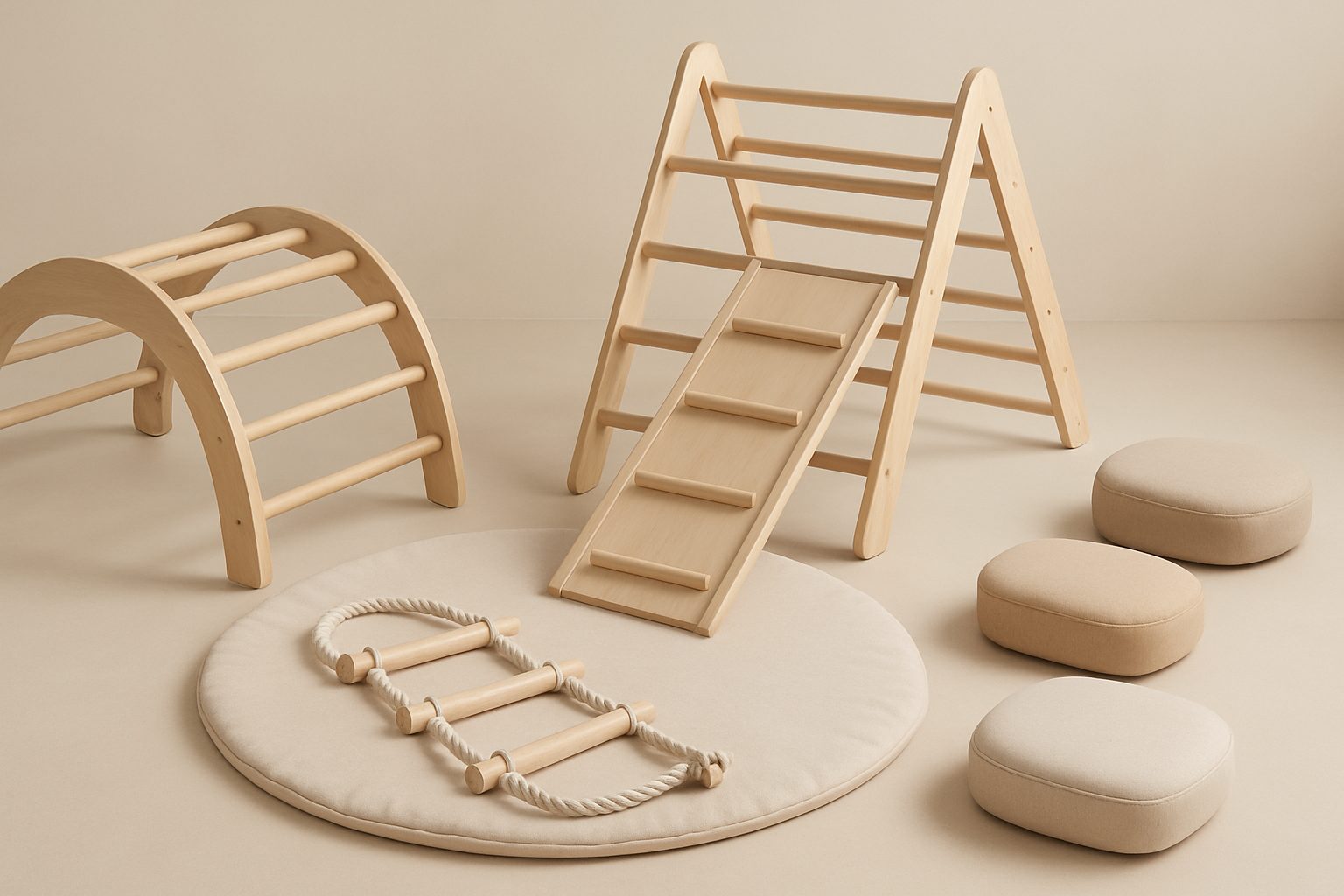
Wooden vs Metal Indoor Climbing Frames UK: Which Is Better for Your Child?
Indoor climbing frames have shifted from niche gym equipment to a genuine fixture in family homes. Most UK parents choosing between wooden and metal structures face a real trade-off: wooden frames offer visual warmth and flexible design, while metal ones deliver pure durability and tighter construction. Neither is objectively "better"—it depends on your space, budget, and tolerance for maintenance.
Durability and Longevity
Metal frames, typically steel or aluminium, outlast wooden alternatives by years under identical use. Steel rusts without proper coating, but quality UK-made frames come powder-coated, making rust a non-issue in a home environment. They'll withstand intense daily use, jumping, and the sort of rough handling children inflict. After five years, a well-maintained metal frame looks nearly identical to day one.
Wooden frames, usually made from pine, birch plywood, or hardwood, degrade more noticeably. Pine softens with age and moisture exposure, especially in damp ground-floor rooms. Joints can loosen as wood moves seasonally, requiring tightening every 12–18 months. A wooden frame in an unheated garage will deteriorate faster than one in a climate-controlled bedroom. With annual sealing and reasonable care, quality wooden frames last 3–4 years of heavy use; cheaper budget versions may show wear within 18 months.
Aesthetics and Room Integration
This is where wooden frames genuinely shine. They blend into family living spaces in a way metal rarely does. A Scandi-style natural wood climbing frame doesn't look like gym equipment—it becomes part of the room's design. Light pine or whitewashed options work in modern interiors, whilst darker wood suits traditional homes. Parents report that visitors often don't immediately recognise them as climbing frames.
Metal frames, by contrast, read as functional equipment. Bright colours (blues, reds, yellows) are common and add visual noise, though some minimalist designs in black or grey steel are available. If your living room is your selling point and you're hosting clients or elderly relatives regularly, a wooden frame causes less visual friction.
Weight Limits and Safety Certifications
Metal frames typically support heavier cumulative weight. A standard steel frame handles 100–150 kg safely, with some commercial-grade options reaching 200 kg. This matters if you have multiple children climbing simultaneously or heavier pre-teens using the frame intensely.
Wooden frames usually cap at 70–120 kg, depending on construction and wood type. They're perfectly adequate for children up to about 11–12 years old, but a bulky teenager will exceed safe limits.
Both should comply with BS EN 71 (toy safety) or BS EN 14974 (climbing equipment standards). Check certifications carefully: cheap imported frames, particularly from unregistered sellers, sometimes lack documentation. UK retailers and established manufacturers like Plum, TP Toys, and Wickey consistently meet standards. Metal frames sourced through Amazon or smaller distributors require verification.
Cost and Value
Wooden frames cost £200–£600 for solid, British-made options. Imported pine frames drop to £100–£250 but sacrifice durability. Metal frames range £250–£700, with commercial-grade versions exceeding £1,000.
The value calculation shifts based on time horizon. If you're buying for a four-year-old, a budget wooden frame will outlast their climbing years. If you have two children spanning six years apart, metal's durability becomes cost-effective over time. Factor in maintenance: wooden frames need annual sealant, occasional repairs, and possible replacement of worn rope or nets. Metal is a one-time investment.
Practical Considerations
Space and installation: Wooden frames often suit awkward corners or odd-shaped rooms—bespoke options exist. Metal frames come in standardised shapes and require level, stable ground. Both need proper ground anchoring or mat placement to prevent tipping.
Rope and attachment: Wooden frames use natural rope, which feels more pleasant for small hands. Metal frames use synthetic rope or nylon netting, which is hardier but less "natural" to grip.
Weather exposure: If your frame goes in a conservatory or uninsulated garden room, metal wins decisively. Wooden frames need shelter from direct rain and extreme temperature swings.
Top Picks in Each Category
For wooden frames, Plum Outdoor's range consistently delivers UK-made quality with proper certifications. Their designs are attractive enough to live in modern homes without apology.
For metal frames, Wickey climbing towers offer better value than premium brands without sacrificing safety certification. Their modular approach lets you add components as children grow.
Which Should You Choose?
Choose wooden if: you prioritise aesthetic integration, have space constraints, plan to use the frame for a single child's climbing years, and your home is reasonably dry and temperature-stable.
Choose metal if: durability matters more than appearance, you have multiple children or heavier users, you want minimal maintenance, or your space is damp, unheated, or outdoors.
In practice, most UK families find that a mid-range metal frame solves the problem with zero fuss. Wooden frames suit parents who see them as furniture. Neither choice is wrong—it's about what matters more in your home.
More options
- Indoor Climbing Frames – General UK (Amazon UK) (Amazon UK)
- Toddler & Baby Climbing Frames UK (Amazon UK) (Amazon UK)
- Wooden Indoor Climbing Frame & Play Gym (Amazon UK) (Amazon UK)
- Freestanding Kids Climbing Wall & Boulder Panel (Amazon UK) (Amazon UK)
- TP Toys & Plum Play Indoor Frames (Amazon UK) (Amazon UK)